
Introduction
For most patients diagnosed with rectal cancer, this is the first question. Not “Will I survive?” but “Will I need a bag?” The fear is so strong that some patients delay seeing a surgeon, hoping the problem resolves on its own. That delay is dangerous. The honest answer is: it depends. And those factors are worth understanding before you meet your surgeon.
What Is a Colostomy Bag and Why Is It Used?
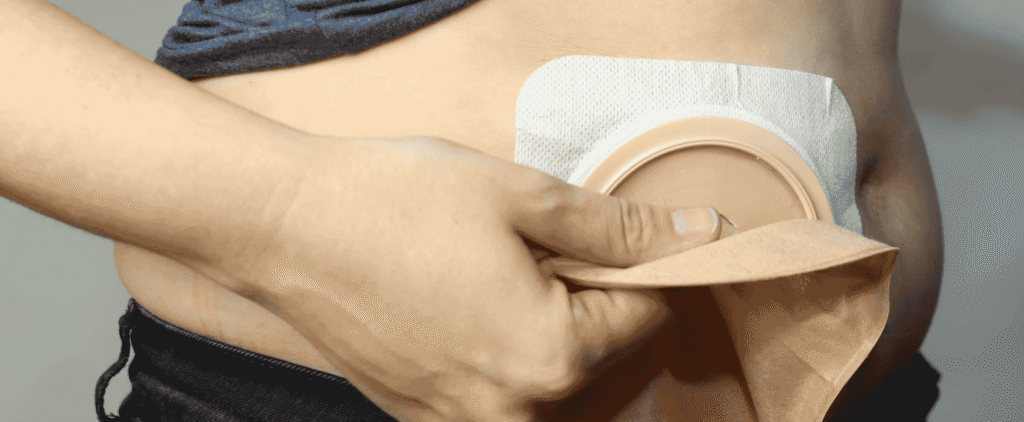
When surgeons remove part of the rectum or bowel, the remaining ends need to be reconnected. In some cases, this reconnection cannot happen safely right away, or the tumor location makes reconnection impossible. A colostomy creates an opening in the abdomen (called a stoma) through which waste exits the body into an external pouch. This pouch is the colostomy bag. It can be temporary, while the bowel heals, or permanent, when the natural passage cannot be restored.
Not Every Rectal Cancer Patient Needs One
This is the most important thing to understand: a colostomy is not automatic with rectal cancer surgery. Whether you need one depends on several factors including how far the tumor is from the anal opening, the stage of the cancer, your overall health and bowel function, and the surgical technique available.
Tumors located higher in the rectum, away from the anal sphincter, can often be removed while preserving the sphincter entirely. No colostomy needed. Even some lower rectal tumors can now be treated with sphincter-saving techniques that were not available a decade ago.
When a Temporary Colostomy May Be Needed
Even when the surgeon successfully reconnects the bowel (called an anastomosis), they sometimes create a temporary colostomy to protect the join while it heals. It diverts stool away from the new connection so it can heal without risk of leakage. This is usually reversed after two to three months in a second, simpler operation. Most patients who receive one have it reversed successfully.
When a Permanent Colostomy Cannot Be Avoided
A permanent colostomy is needed when the tumor is very low in the rectum and has grown into the anal sphincter muscles. Preserving the sphincter is not possible in these cases. The entire rectum and anus are removed in a procedure called an abdominoperineal resection (APR). This is done when it gives the patient the best chance of complete cancer removal. The goal is always to cure first.
How Modern Surgery Is Saving More Patients from Permanent Colostomy
Robotic and laparoscopic surgical techniques have significantly improved outcomes in rectal cancer. These minimally invasive approaches give the surgeon a clearer, magnified view of the narrow pelvic area where the rectum sits. This precision makes sphincter-preserving surgery possible in cases where open surgery would have required removal. Robotic surgery in particular allows movement in tighter spaces than the human hand can achieve, which directly reduces the number of patients who need a permanent colostomy.
Neoadjuvant treatment (chemotherapy or radiation given before surgery) can also shrink tumors enough that a sphincter-saving operation becomes possible when it previously was not.
Questions to Ask Your Surgeon Before the Operation
Before consenting to surgery, ask your surgeon these questions directly. Is my tumor location suitable for sphincter-preserving surgery? What is the likelihood I will need a temporary versus permanent colostomy? Are you using robotic or laparoscopic techniques for this operation? If a temporary colostomy is created, what is the timeline and process for reversal? What happens to my bowel function after reconnection?
A good surgeon will answer each of these clearly and without making you feel rushed.
Consult Dr Akash Mor
Dr Akash Mor is a surgical oncologist and robotic cancer surgeon based in Chhatrapati Sambhajinagar with specialized training in minimally invasive cancer surgery including robotic and laparoscopic rectal cancer procedures. His focus on sphincter-preserving techniques means more patients leave surgery without a permanent colostomy.
Call +91 9226889137 | Website: drakashmor.com
Conclusion
A colostomy bag is not an automatic part of rectal cancer surgery. Whether you need one, and whether it is temporary or permanent, depends on your tumor, your body, and your surgeon’s skill and technique. Modern robotic surgery has expanded the options available to patients significantly. The most important step is getting an accurate assessment from a surgeon who specializes in rectal cancer before making any decisions.
FREQUENTLY ASKED QUESTIONS (FAQs)
Q1: Does everyone with rectal cancer need a colostomy bag?
No. Whether a colostomy is needed depends on the location of the tumor, its stage, and the surgical technique used. Many rectal cancer patients have sphincter-preserving surgery and never need a colostomy bag. Others need a temporary one during healing, and a smaller group require a permanent one when the tumor involves the sphincter muscles.
Q2: What is the difference between a temporary and permanent colostomy?
A temporary colostomy diverts stool while the bowel heals after surgery. It is usually reversed within two to three months in a second operation. A permanent colostomy is created when the rectum and anus must be completely removed and cannot be reconnected. The difference depends on tumor location and surgical findings.
Q3: Can robotic surgery help me avoid a colostomy bag?
In many cases, yes. Robotic surgery gives surgeons a clearer, more precise view inside the narrow pelvis, making sphincter-preserving operations possible in cases where open surgery would have required removal of the anus. Ask your surgeon specifically whether robotic surgery is an option for your case.
Q4: What is sphincter-preserving surgery?
Sphincter-preserving surgery is an operation that removes the rectal tumor while keeping the anal sphincter muscles intact, allowing the patient to continue passing stool normally. It avoids the need for a colostomy. Whether it is possible depends on how close the tumor is to the sphincter and whether the cancer has grown into those muscles.
Q5: If I need a temporary colostomy, will it definitely be reversed?
In most cases, yes. Temporary colostomies are planned for reversal once the bowel join has healed, usually after two to three months. Your surgeon will confirm the reversal plan before the first operation and will assess the healed join before reversing.
Q6: What is an abdominoperineal resection (APR)?
An abdominoperineal resection is a surgical procedure that removes the rectum, anus, and anal sphincter muscles. It results in a permanent colostomy. It is performed when the tumor is too close to or has grown into the sphincter to allow sphincter-preserving surgery.
Q7: How will I know if my tumor is low enough to require a permanent colostomy?
Your surgeon will assess this through MRI imaging and clinical examination before surgery. The distance between the tumor and the anal sphincter, along with signs of sphincter involvement, determines whether sphincter-preserving surgery is possible. This assessment should be done before any surgical decision is made.
Q8: What is life like with a permanent colostomy bag?
Many patients live full, active lives with a permanent colostomy. With proper training from a stoma care nurse, managing the bag becomes routine. Diet, work, travel, and most physical activities can continue. The adjustment takes time, but most patients report that quality of life improves once cancer is removed.
Q9: Can chemotherapy or radiation before surgery help me avoid a colostomy?
Sometimes. Treatment given before surgery, called neoadjuvant therapy, can shrink the tumor enough that sphincter-preserving surgery becomes possible when it initially was not. Your oncology team will assess whether pre-surgical treatment is appropriate for your case.
Q10: How do I find out if I am a candidate for sphincter-preserving rectal cancer surgery?
Consult a surgical oncologist who specializes in rectal cancer and performs minimally invasive procedures. Bring your MRI scans and biopsy reports. An experienced surgeon will give you a clear answer about your options before any surgery is planned. Contact Dr Akash Mor at +91 9226889137 or visit drakashmor.com.